
Who Is the Cheapest Electricity Supplier in Ireland in June 2026?
As of June 2026, Yuno Energy offers the cheapest standard 24hr electricity at €1,554/year. For smart meters, SSE Airtricity leads at €1,484/year.
Ireland has 11 licensed electricity suppliers, each competing on unit rates, standing charges, and introductory discounts. With wholesale prices stabilising after the energy crisis, the gap between the cheapest and most expensive supplier can exceed €400 per year - making a regular switch one of the simplest ways to cut household costs.
This guide compares every electricity and gas plan available in Ireland right now. All estimates are based on the CRU average consumption figures (4,200 kWh electricity, 11,000 kWh gas) and include standing charges, the PSO levy, and VAT at 9%. They do not include cashback or welcome credits.
Whether you have a standard 24hr meter, a smart meter, or a NightSaver meter, the tables below will show you exactly which supplier offers the lowest annual bill for your setup.
Ready to Switch and Save on Your Energy Bills?
Our energy experts at Selectra can help you secure a great rate for your home - completely free.
The cheapest electricity supplier in Ireland is Yuno Energy, whose Standard, 24hr deal costs an estimated €1,554 per year based on average consumption of 4,200 kWh. You can see how all providers compare on our electricity prices page.
| Meter type | Cheapest plan | Annual cost | Score | |
|---|---|---|---|---|
| 24hr Standard |  |
Standard, 24hr | €1,554 | 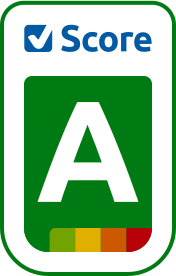 |
| Smart Meter |  |
Smart Electricity | €1,484 |  |
| NightSaver |  |
NightStorage | €1,334 | |
Based on 4,200 kWh average annual usage, urban meter, VAT included. Updated 4 June 2026.
Which Supplier Has the Cheapest 24hr Electricity?
The table below ranks all standard 24hr electricity plans from cheapest to most expensive. A 24hr meter charges the same unit rate around the clock - if you cannot shift usage to off-peak hours, this is the plan type to compare.









Based on 4,200 kWh, urban meter, all prices VAT-inclusive. Updated 4 Jun 2026.
Who Has the Cheapest Smart Meter Electricity?
Smart meter plans use time-of-use pricing with different day, night and peak rates. The table shows estimated annual costs based on average usage patterns. If you have a smart meter, you can access the best smart meter plans and potentially save hundreds by shifting usage to off-peak hours.
Based on 4,200 kWh, urban smart meter. Updated 4 Jun 2026.
Who Has the Cheapest NightSaver Electricity?
NightSaver (day/night) meters split your usage into day and night rates, giving you cheaper off-peak power. These meters are ideal for homes with storage heaters or immersion heaters that can run overnight.
Based on 4,200 kWh, urban day/night meter. Updated 4 Jun 2026.
Ready to Switch and Save on Your Energy Bills?
Our energy experts at Selectra can help you secure a great rate for your home - completely free.
Who Is the Cheapest Gas Provider in Ireland?
All calculations are based on 11,000 kWh of annual gas usage with Carbon Tax and VAT included. For a deeper breakdown of gas unit rates, see our dedicated gas prices comparison.

Based on 11,000 kWh, urban meter, VAT and Carbon Tax included. Updated 4 Jun 2026.
Who Has the Cheapest Dual Fuel Deal?
Bundling your electricity and gas with a single supplier often unlocks extra discounts. The table below compares all available dual fuel deals based on combined annual costs for 4,200 kWh electricity and 11,000 kWh gas.
Based on 4,200 kWh electricity + 11,000 kWh gas, urban meter, VAT included. Updated 4 Jun 2026.
Who Has the Cheapest Pay-as-You-Go Electricity?
PAYG plans let you top up in advance, but they typically cost more than standard bill-pay plans. For a detailed comparison of prepay options, see our cheapest PAYG electricity guide.

Based on 4,200 kWh, urban PAYG meter. Updated 4 Jun 2026.
Why Is PAYG More Expensive?
Most PAYG providers charge a Prepayment Service Charge in addition to the standard standing charge. On average, a PAYG customer may pay between €100 and €200 more per year than a customer on a standard bill-pay discount plan.
Is Pay-as-You-Go Right for You?
Advantages
- No surprise bills: You only spend what you have topped up.
- Debt management: Useful for paying off existing energy arrears gradually.
- Usage awareness: Seeing the credit drop in real-time makes you more conscious of energy waste.
Disadvantages
- Higher costs: Usually higher unit rates and daily standing charges.
- Risk of self-disconnection: If you forget to top up, your power will go off.
- Topping up: Requires manual intervention via an app or a local shop.
How Much Is the Average Electricity Bill in Ireland?
Based on CRU average consumption of 4,200 kWh per year, the average annual electricity bill in Ireland ranges from approximately €1,300 to €1,700 depending on your supplier and meter type. Households with smart meters or NightSaver meters can often pay less than those on a standard 24hr tariff by shifting usage to cheaper off-peak hours.
Your actual bill depends on several factors including your electricity usage, whether you live in an urban or rural area, and your home's BER rating.
2026 Electricity Market Outlook
As we head into 2026, the hunt for the cheapest electricity in Ireland is changing. While wholesale prices have stabilised, the end of universal government energy credits means your net out-of-pocket costs may rise. You can track the latest movements on our 2026 price outlook page.
- VAT Rate: The 9% VAT rate is now secured until 2030, avoiding a feared 4.5% price hike. See our VAT on electricity explainer.
- PSO Levy: As of December 2025, the levy has dropped to just €1.46 per month. Read more about the PSO levy.
- Network Charges: A €19bn grid investment (PR6) means standing charges will likely increase by €12–€21 this year to fund renewable energy infrastructure.
- Carbon Tax: Increasing to €71/tonne from May 2026, which primarily affects gas bills. Learn more about the carbon tax.
All estimates are based on CRU average consumption (4,200 kWh electricity, 11,000 kWh gas) and include standing charges, VAT and PSO levy. They do not include cashback offers.
Coming in 2026: Dynamic Electricity Pricing
By June 2026, the CRU will require all major suppliers to offer Dynamic Price Plans.
Unlike standard smart tariffs, these rates change every 30 minutes based on the actual wholesale cost of electricity on the EirGrid system. You can already track wholesale prices on our electricity prices today page.
While these plans are not for everyone, they will likely be the cheapest electricity Ireland offers for:
- Electric Vehicle (EV) owners who can charge during "plunge pricing" (when wind energy is high).
- Homes with solar batteries that can "buy" cheap power at night to use during the day.
- Consumers who can automate heavy appliance use via smart home technology.
Who Is the Best Electricity Provider in Ireland?
Choosing the best electricity provider depends on your priorities. Our Selectra Score rates each supplier across multiple criteria:
- Price - Does the provider offer discounted unit rates? Are their standing charges competitive?
- Renewable energy - Does the supplier use 100% renewable energy?
- Customer service - Is the provider well reviewed by customers?
- Smart meter options - Does the provider offer competitive time-of-use rates?
- Payment options - Direct debit, PAYG, or both?
- Dual fuel - Do they bundle gas and electricity at a discount?
The CRU recommends switching providers around once a year to get the best deal. You are protected by a 14-day cooling-off period after switching.
Benefits of Switching Energy Supplier
- Save money with lower bills by switching every 12 months
- Avail of discounts and introductory offers
- Avoid being moved to a more expensive rate after your contract ends
- Find better customer service, online payments, and smart meter support
- Take advantage of your 14-day cooling-off period
Ready to Switch and Save on Your Energy Bills?
Our energy experts at Selectra can help you secure a great rate for your home - completely free.
Frequently Asked Questions About The Cheapest Electricity in Ireland
The outlook for 2026 is mixed. The 9% VAT rate is secured until 2030, but network charges are rising (PR6 grid investment) and universal energy credits have ended. Key factors:
- VAT stability: 9% rate extended to 2030
- Network charges: ~€29/year increase from October 2025
- No universal credits: Government shifting to targeted supports like the Fuel Allowance
- Carbon tax: Increasing to €71/tonne from May 2026 (affects gas bills)
- Dynamic tariffs: Required from mid-2026, offering potential savings for flexible users
Read our full analysis: Will electricity prices go up in 2026?
Smart meters unlock time-of-use pricing with ultra-low night rates (often 8–9c/kWh). By shifting heavy usage - EV charging, heat pumps, dishwashers - to off-peak hours, households can save €150–300/year. A smart meter is also required for solar export payments.
Yes. SEAI offers grants for insulation, heat pumps, solar PV panels, and whole-home upgrades. The Warmer Homes Scheme provides 100% funding for eligible households. Solar panel installations have 0% VAT.
Yes, through the Clean Export Guarantee (CEG). Your supplier pays you for surplus solar electricity exported to the grid - the first €200/year is tax-free. A smart meter is required to measure exports. Compare the best microgeneration rates across all suppliers.
A fixed-rate plan locks your unit rate for 12–24 months, protecting you from price increases. A variable plan can change at any time with 30 days' notice from your supplier. Fixed plans are generally recommended if you want bill certainty, while variable plans may be cheaper when wholesale prices are falling. See our full guide to types of electricity plans.
Conclusion: how to get the cheapest electricity in Ireland
Finding the cheapest electricity in Ireland comes down to three steps: know your meter type, compare all suppliers, and switch regularly. With 11 providers competing, there is always a better deal available - especially if your current contract has expired and you have been moved to a standard rate.
If you have a smart meter, take advantage of time-of-use rates. If you heat with gas, look at dual fuel bundles. And if you are on a tight budget, check whether you qualify for the Household Benefits Package or the Fuel Allowance.