
How Many kWh Does It Take to Run a House in Ireland?
Energy bills are one of the largest household expenses in Ireland. Whether you have recently moved into a new home, are budgeting for the year ahead, or simply want to check whether your consumption is above average, knowing the benchmark figures helps you make informed decisions about switching energy suppliers or investing in efficiency upgrades.
The CRU defines the “typical domestic customer” as one using 4,200 kWh of electricity per year. For gas, Gas Networks Ireland sets the benchmark at 11,000 kWh. These are the figures used by the CRU when comparing suppliers and by providers when advertising annual cost estimates.
However, actual consumption varies enormously. A one-bed apartment with a single occupant might use fewer than 3,000 kWh of electricity, while a large family home with an immersion heater, tumble dryer, and poor insulation could exceed 5,500 kWh. The sections below explain what drives these differences and how you can bring your usage — and your bills — closer to the lower end of the scale.
Ready to Switch and Save on Your Energy Bills?
Our energy experts at Selectra can help you secure a great rate for your home - completely free.
What Is the Average Electricity Usage in Ireland?
The typical Irish household consumes roughly 4,200 kWh per year, according to the CRU. This breaks down to approximately 11.5 kWh per day or 350 kWh per month.
| Energy Use | Home Type | Annual Consumption | Annual Cost |
|---|---|---|---|
| Low | 1–2 bed flat / house | 3,000 kWh | €1,085 |
| Medium | 2–3 bedroom house | 4,200 kWh | €1,501 |
| High | 4+ bedroom house | 5,500 kWh | €1,953 |
Costs based on Electric Ireland’s Urban 24hr tariff of 34.75c/kWh including VAT. Last updated March 2026.
If your consumption is closer to the “High” bracket, it may be worth investigating whether a smart meter plan or a NightSaver tariff could shift some of that usage to cheaper off-peak hours.
How Does Electricity Consumption Change Seasonally?
Electricity consumption during the winter months (October to March) is significantly higher than in summer. The CRU’s data shows winter usage can increase by 40–60% above summer levels, driven by shorter daylight hours and greater reliance on lighting, heating systems, and tumble dryers.
| Season | Daily Average | Monthly Estimate | Key Drivers |
|---|---|---|---|
| Summer (Apr–Sep) | 8–10 kWh | 240–300 kWh | Longer daylight, less heating |
| Winter (Oct–Mar) | 13–16 kWh | 400–480 kWh | Lighting, heating, dryers |
If you notice a sharp increase in winter bills, consider whether improved insulation or a heat pump could reduce your reliance on electric heating during the colder months.
How Many kWh of Gas Does It Take to Heat a Home?
Gas Networks Ireland estimates average yearly gas consumption for a standard three-bedroom house at approximately 11,000 kWh. Gas is used primarily for central heating and hot water, with consumption heavily weighted towards the winter months.
| Energy Use | Home Type | Annual Gas Consumption | Annual Cost |
|---|---|---|---|
| Low | 1–2 bed flat / house | 8,250 kWh | €921 |
| Medium | 2–3 bedroom house | 11,000 kWh | €1,228 |
| High | 4+ bedroom house | 13,750 kWh | €1,535 |
Not connected to the gas network? Many rural homes rely on home heating oil or LPG instead. The cheapest way to heat your home depends on your location, insulation level, and available fuel sources.
Electricity and Gas Consumption Calculator
Estimate your annual electricity and gas consumption based on your home type, size, number of residents, and energy usage.
Housing Type
Surface
Number of Residents
Is Your Home Well Insulated?
Energy Type Used for Heating
Energy Type Used for Hot Water
Energy Type Used for Cooking
Is This a Second Home?
Days Present per Year
Your Estimated Electricity Consumption
Your Estimated Gas Consumption
- Base electricity consumption
- Heating consumption (electric)
- Heating consumption (gas)
- Heating consumption is not calculated (other energy source).
- Hot water consumption is not calculated (other energy source).
- Cooking consumption is not calculated (other energy source).
Based on average consumption patterns for Irish households. Actual consumption may vary depending on appliance efficiency, local climate, building age, and usage habits.
What Influences the Average kWh Consumption?
Number of Occupants
Additional household members typically increase both electricity and gas usage. Families of four or more tend to exceed average consumption due to more frequent cooking, laundry, showering, and use of electronic devices.
Working From Home
Remote work patterns have raised household energy consumption through increased heating, lighting, and kitchen appliance usage during daytime hours. The ESB estimated that a full-time home worker adds roughly 5–10% to annual electricity consumption.
Where You Live
Rural areas show higher energy consumption due to outdoor security lighting, increased weather exposure, and larger properties. Homes in rural areas may also face different meter types and standing charges.
Efficiency of Appliances
Older, less efficient appliances consume significantly more electricity. Many households retain appliances for 10–15 years, well beyond the point where modern replacements with A-rated energy ratings would deliver substantial savings. See our guide to the most power-hungry appliances for details.
The Immersion Heater
The immersion heater ranks among the biggest electricity consumers in Irish homes, typically using 2.5 kW per hour. Leaving it on unnecessarily for two hours costs approximately €1.74. A timer switch can cut this expense dramatically.
Heating
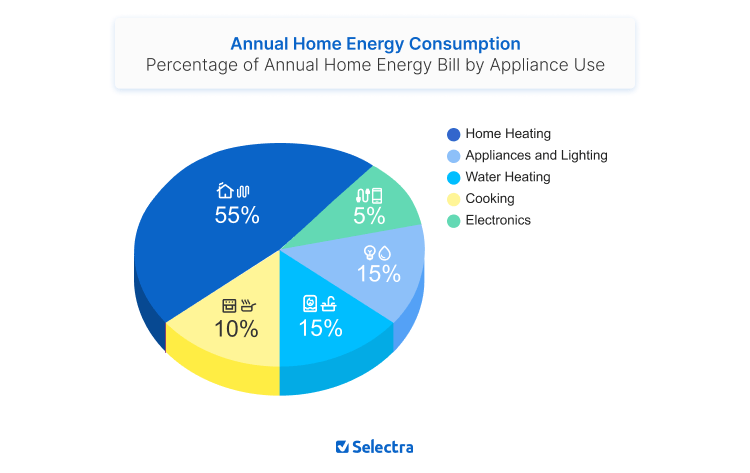
Heating typically accounts for almost 60% of an annual energy bill due to Ireland’s extended heating season (roughly seven months). Upgrading your gas boiler, investing in a condensing boiler, or switching to a heat pump can reduce heating costs considerably.
BER Rating and Insulation
A home’s BER rating is a strong indicator of how much energy it needs. Poorly insulated homes (D or E rated) can use 2–3 times more heating energy than a B-rated property. SEAI grants are available for cavity wall insulation, attic insulation, and other upgrades.
Ready to Switch and Save on Your Energy Bills?
Our energy experts at Selectra can help you secure a great rate for your home - completely free.
Home Appliance Cost per Use
Knowing how much each appliance costs to run helps you identify where savings are easiest. The table below uses Electric Ireland’s standard unit rate of 34.75c/kWh.
| Appliance | Power (kW) | Cost per Use | Based On |
|---|---|---|---|
| Electric Shower | 8.5 | €0.49 | 10-min shower |
| Tumble Dryer | 5.0 | €1.74 | 1-hour cycle |
| Electric Kettle | 3.0 | €0.05 | 3 min boiling |
| Immersion Heater | 2.5 | €1.74 | 2 hours heating |
| Dishwasher | 1.8 | €0.94 | 1.5-hour cycle |
| Hair Dryer | 1.5 | €0.04 | 5 min drying |
| Vacuum Cleaner | 1.4 | €0.24 | 30 min |
| Toaster | 1.2 | €0.01 | 2 min toasting |
| Clothes Iron | 1.0 | €0.17 | 30 min ironing |
| Microwave | 0.85 | €0.25 | 5-min cycle |
| Washing Machine | 0.65 | €0.56 | 2.5-hour cycle |
| Television (36″) | 0.20 | €0.41 | 6 hours |
| Refrigerator | 0.18 | €0.34 | One day |
Costs based on Electric Ireland unit rate 34.75c/kWh on an Urban 24-hour meter with VAT included. Last updated March 2026.
Below, you'll find a breakdown of the percentage of an annual home energy bill by appliance use:
How to Reduce Your Energy Consumption
There are several practical steps you can take to lower your kWh consumption, from no-cost habit changes to larger investments that qualify for SEAI grant funding.
Install a Smart Meter
A smart meter lets you track your electricity consumption in near real-time and identify wasteful patterns. Use the ESB Smart Meter App to see daily, weekly, and monthly usage breakdowns. Smart meters also unlock access to time-of-use tariffs that reward shifting usage to off-peak hours.
Retrofit Your Home
Upgrades to insulation, heating systems, and windows decrease heating needs and can dramatically improve your BER rating. The Warmer Homes Scheme provides free upgrades for eligible households, while SEAI grants cover a portion of costs for others.
Invest in Microgeneration
Solar panels offset your dependence on the grid. The Micro-Generation Support Scheme permits selling excess electricity back to your provider at competitive export rates. Combined with a battery storage system, solar can cover a significant portion of your electricity needs.
Choose Energy-Efficient Appliances
Switch to LED bulbs (which use up to 80% less energy than traditional bulbs), purchase appliances with the highest efficiency ratings, and consider equipment like air fryers that use less energy than conventional ovens. A smart thermostat can also reduce heating waste by learning your schedule.
Develop Energy-Saving Habits
Small changes add up: unplug unused devices (standby power accounts for almost 10% of annual energy usage), selectively heat the rooms you use, programme dishwashers and washing machines to run overnight on a NightSaver tariff, and check our 25 ways to save energy for more ideas.
Switch to a Cheaper Supplier
Even without changing a single habit, you could save hundreds of euros per year by moving to the cheapest electricity deal on the market. Use our energy price comparator to see what’s available, or read our guide to switching providers.
Ready to Switch and Save on Your Energy Bills?
Our energy experts at Selectra can help you secure a great rate for your home - completely free.
Frequently Asked Questions About Average Electricity Usage
Based on the CRU’s benchmark consumption of 4,200 kWh/year and Electric Ireland’s standard rate, the average monthly electricity bill comes to roughly €125. However, this varies considerably by provider, tariff type, and actual consumption. See our average gas and electricity bill guide for a full breakdown.
The easiest way is through a smart meter and the ESB Smart Meter App, which shows half-hourly, daily, and monthly usage data. If you have a traditional meter, you can read it manually and compare readings over time. Your energy bill also shows the total kWh consumed during each billing period.
The CRU figure of 4,200 kWh is an overall average across all household types and heating fuels. Homes that rely on electric storage heaters or an immersion heater as the primary heat source tend to consume significantly more — often 6,000–8,000 kWh. If you heat with electricity, compare your bills against the “High” bracket (5,500 kWh) rather than the medium average.
If you are on a NightSaver or smart meter time-of-use plan, off-peak hours (typically 11pm to 8am) offer rates that can be 30–50% cheaper than daytime rates. Running your dishwasher, washing machine, and tumble dryer overnight can make a real difference to your annual bill.
A 4-bedroom house typically falls into the “High” usage bracket of around 5,500 kWh per year (€1,953 at standard rates). However, well-insulated homes with efficient appliances can stay closer to 4,200 kWh, while older homes with poor BER ratings may exceed 7,000 kWh.
Conclusion
The average Irish household uses 4,200 kWh of electricity and 11,000 kWh of gas per year, but your actual consumption depends on your home size, insulation quality, number of occupants, and daily habits. If your bills feel higher than they should be, start by checking your consumption against the benchmarks in this guide, then look at the biggest cost drivers — heating, the immersion heater, and tumble dryer usage.
Combining simple habit changes with a switch to the cheapest electricity provider can save hundreds of euros per year without any upfront investment. For larger savings, consider retrofitting your home or installing solar panels — both of which qualify for SEAI grant support.
Related guides