
A heat pump is a highly efficient device that transfers heat from one place to another (typically the air or ground) to heat your home and water, rather than generating heat by burning fuel. Installation costs range from €12,000 to €28,000 before SEAI grants of up to €6,500, with systems drastically reducing long-term running costs versus fossil fuel alternatives.
What Is a Heat Pump, and How Does It Work?
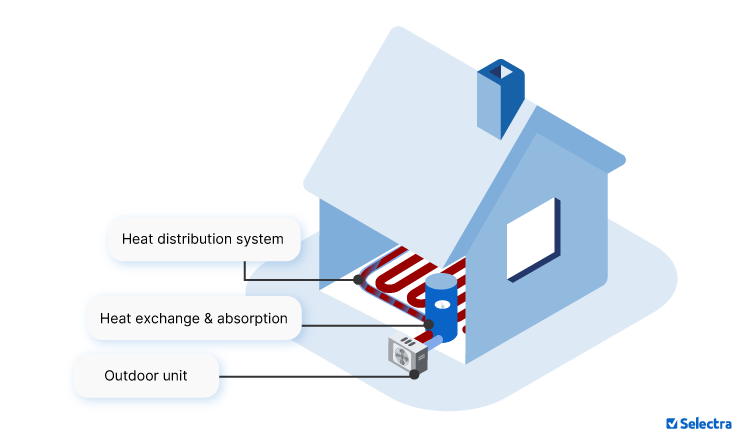
A heat pump is a device that transfers heat energy from one place to another, rather than generating it by burning fuel.
They use a small amount of electricity to move a large amount of heat. Even when the air outside is cold, a heat pump extracts heat energy and transfers it inside your home to heat both your rooms and your hot water.
Air-to-Water vs. Ground-Source Heat Pumps
Three primary residential types:
- Air-to-Water Heat Pumps (ASHP): The most popular choice. They extract heat from the outside air and transfer it to your water-based heating system (radiators or underfloor heating).
- Air-to-Air Heat Pumps (AAHP): It works by transferring heat directly into your home's internal air via blower units, providing both instant heating in winter and efficient cooling in summer.
- Ground-Source Heat Pumps (GSHP): These use underground pipes to absorb heat from the earth, which remains at a relatively constant temperature year-round. While more efficient, they have a higher installation cost and require significant land for the collector loops.
Save on Your Home Heating Bills Today!
Our heating experts at Selectra can help you save on boiler services, heat pumps, and home heating oil - for free.
Is My Home Suitable for a Heat Pump?
For a heat pump to be efficient and cost-effective, your home must retain heat effectively. This is the single most important factor for success and is mandatory for the SEAI grant.
The Heat Loss Indicator (HLI) Requirement
The HLI measures the total heat loss (through fabric and ventilation) divided by the floor area, measured in Watts per Kelvin per square metre.
- Your home's HLI must be less than or equal to 2.0 W/(K.m²). In some specific, non-cost-optimal cases, up to 2.3 W/(K.m²) may be accepted.
- If your HLI is too high, it means heat is escaping too quickly. A heat pump, which runs at a lower temperature than a boiler, would have to work too hard to keep the house warm, leading to high running costs. Improving your home's insulation is the most effective way to reduce your HLI.
The SEAI Technical Assessment
Before you can apply for the grant, you must hire an independent, SEAI-Registered Technical Advisor (grant aid of €200 is available for this).
Technical Advisor responsibilities:
- Conduct BER assessment to determine current HLI
- Provide detailed report on required fabric upgrades (insulation, windows) to achieve acceptable HLI
- Ensure upgrades completed before heat pump installation
Radiator and Cylinder Compatibility
Radiators: Since heat pumps work best at low flow temperatures (35°C to 45°C) versus a boiler's 70°C, your existing radiators may not be large enough to heat the rooms effectively. You may need to install larger low-temperature radiators or opt for underfloor heating.
Hot Water Cylinder: You will almost certainly need to replace your hot water cylinder with one that has a larger surface area coil, designed to work efficiently with the heat pump's lower flow temperature.
How Much Do Heat Pumps Cost?
The final cost to the homeowner is heavily influenced by the SEAI grant and the extent of required retrofit work. You can expect to pay anything between €1,000 to over €20,000 for a heat pump in Ireland.
SEAI Heat Pump Grants (Individual Application)
| System Type | SEAI Grant Value | Grant Status |
|---|---|---|
| Air-to-Water / Water-to-Water | €6,500 | Available |
| Ground-Source | €6,500 | Available |
| Air-to-Air (Space Heating Only) | €600 | Available |
| Technical Assessment | €200 | Available |
Estimated Installation Costs (Excl. Grants)
| Heat Pump Type | Total Installed Cost (Excl. Grant) | Typical Homeowner Cost (Post-Grant) |
|---|---|---|
| Air-to-Water | €12,000 - €18,000 | €5,500 - €11,500 |
| Ground-Source | €18,000 - €28,000 | €11,500 - €21,500 |
These ranges cover the unit, cylinder, installation, electrical work, and minor plumbing. They exclude major fabric upgrades (insulation, windows) which are grant-aided separately.
What Are the Running Costs of a Heat Pump?
The true measure of a heating system's value is its annual running cost.
Heat Pump vs. Other Heating Systems
| Heating System | Unit Price (c/kWh) | Typical Efficiency | Energy Input Required (kWh) | Estimated Annual Cost |
|---|---|---|---|---|
| Air-to-Water Heat Pump | 35.0 c/kWh (Electricity) | 350% (SPF 3.5) | 3,429 kWh | €1,200 |
| Ground-Source Heat Pump | 35.0 c/kWh (Electricity) | 400% (SPF 4.0) | 3,000 kWh | €1,050 |
| Natural Gas Boiler | 14.0 c/kWh (Gas) | 92% | 13,043 kWh | €1,826 |
| Oil Boiler (Kerosene) | 11.0 c/kWh (Oil) | 90% | 13,333 kWh | €1,467 |
| Direct Electric Heating | 35.0 c/kWh (Electricity) | 100% | 12,000 kWh | €4,200 |
Estimates based on average Irish energy prices in 2025. Costs exclude standing charges and maintenance fees.
Annual servicing by a registered professional is strongly recommended. Costs typically range from €100 to €250 per year.
A heat pump eliminates your need to heat your home using fossil fuels such as oil and gas. The average household could save between €500 and €1,500 per year. See our guide on the cheapest way to heat a house in Ireland for a full comparison.
A well-maintained heat pump system typically lasts 15 to 20 years, significantly longer than the average gas or oil boiler. Manufacturer warranties usually cover the unit for 3 to 7 years.
Save on Your Home Heating Bills Today!
Our heating experts at Selectra can help you save on boiler services, heat pumps, and home heating oil - for free.
What Are the Pros and Cons of Heat Pumps?
Advantages
- High Efficiency (COP): They are significantly more efficient than traditional boilers, converting 1 unit of electricity into 3-4 units of heat.
- Lower Running Costs: Generally cheaper to run than oil or LPG boilers, leading to long-term savings on energy bills.
- Long Lifespan: Systems are durable and typically last 15-20 years or more with proper maintenance.
- Environmental Impact: Zero on-site carbon emissions, reducing your carbon footprint, especially when powered by green electricity.
- Dual Functionality: Many models (especially Air-to-Air) can provide efficient cooling in the summer months.
- Consistent Comfort: Provide a steady, reliable source of heat, maintaining a comfortable temperature 24/7.
Disadvantages
- High Upfront Cost: The initial installation cost is significantly higher than a new gas or oil boiler, even with the SEAI grant.
- Home Suitability Required: Only efficient in homes with excellent insulation and air-tightness (HLI ≤ 2.0 or BER B2). Retrofitting older homes is mandatory.
- Radiator Upgrades: May require the costly replacement of existing radiators with larger, low-temperature units.
- Lower Flow Temperature: The system works best at a low, constant temperature and cannot provide rapid heat boosts like a traditional boiler.
- Installation Complexity: Requires a full system redesign (Technical Assessment), which can be complex and invasive.
- Noise: The external fan unit can generate noise, which must be considered in relation to neighbours and planning exemptions.
Frequently Asked Questions About Heat Pumps
Modern air-source heat pumps are relatively quiet, often operating between 40 and 55 decibels (dB) - similar to a quiet refrigerator. Installation must comply with planning exemptions that limit noise at the boundary to 43 dB(A).
In most cases, no. Conditional Planning Exemptions apply for air-source heat pumps provided the installation meets certain criteria (e.g., unit size, distance from the boundary, and noise limits). Ground-source heat pumps generally do not require planning permission unless they involve extensive groundwork in a protected area.
Yes. A correctly sized and installed heat pump in a properly insulated home (HLI ≤ 2.0) will maintain a comfortable temperature 24/7. Heat pumps work best when running consistently at a lower flow temperature, providing steady background warmth rather than bursts of high heat.
Yes. With the right modifications, you can integrate a heat pump into your current heating system. We recommend getting advice from your plumber or heat pump installer to see what changes are necessary.
Radiators can be used with heat pumps, but they may need to be exchanged to get the full benefit due to a heat pump's steadier, lower temperature distribution. Your heat pump installer will recommend any changes needed.
More Heat Pump Guides
Air-to-Water Heat Pumps
The most popular heat pump type in Ireland, transferring heat from air to your water heating system.
Air-to-Air Heat Pumps
Heat pumps that provide both heating and cooling via blower units for instant comfort.
Ground-Source Heat Pumps
Underground pipe systems that absorb heat from the earth for highly efficient home heating.
SEAI Heat Pump Grant
How to apply for the SEAI heat pump grant of up to €6,500.
Heat Pump Servicing
How often to service your heat pump and what a typical service includes.
Heat Pump Tumble Dryer
How heat pump tumble dryers work and whether they are worth the investment.
Related sections